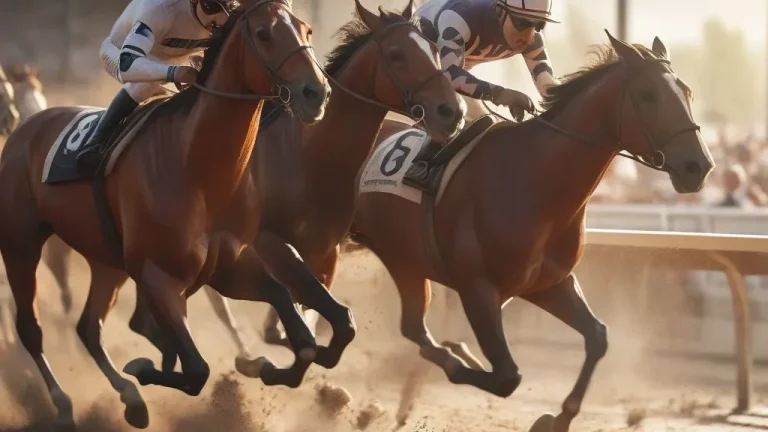
Imagine the roar of the crowd, the pounding hooves, a blur of colors as two horses surge towards the finish line. Neck and neck, they cross it seemingly as one. This isn’t a scene from a movie; it’s the heart-stopping reality of a dead heat in horse racing. One of the most famous examples happened in the 1944 Carter Handicap at Aqueduct Racetrack, where Brownie and Bossuet couldn’t be separated. But what happens when the naked eye can’t declare a winner? That’s where the unsung hero of the racetrack steps into the spotlight: the photo finish.
A dead heat, simply put, is a tie. It occurs when two or more horses cross the finish line at precisely the same instant, impossible to separate with the naked eye. These moments are rare, electrifying, and often controversial. They inject a shot of pure adrenaline into the already dramatic world of horse racing. Photo finishes aren’t just a formality; they are the ultimate arbiters of truth, capturing the precise moment each horse’s nose reaches the finish line.
This article will delve into the fascinating world of photo finishes, exploring the science, technology, and process behind how these critical tools are used to resolve dead heats and ensure fair play in horse racing.
The Thrill of a Tie: Understanding Dead Heats
In the exhilarating world of horse racing, where victory is often measured by mere fractions of a second, there exists a phenomenon that can leave spectators and bettors alike in stunned disbelief: the dead heat. A dead heat, in its simplest definition, occurs when two or more horses cross the finish line at precisely the same moment, rendering it impossible to determine a singular winner. It’s a tie of epic proportions, a testament to the incredible athleticism of the horses and the finely tuned skills of their jockeys.
Dead heats are relatively rare occurrences. Before the advent of modern photo finish technology, determining a winner relied solely on the visual acuity of the finish line judges. This naturally led to a greater number of perceived dead heats. While photo finish cameras have drastically reduced the frequency of these ties, they still happen, proof that even the most advanced technology cannot always definitively separate two horses running at their absolute peak. There even some exciting triple dead heats that happened in history!
While ties might be initially frustrating, especially for those with a wager riding on a single horse, a well-handicapped race where thoroughbreds are closely matched can lead to incredibly tight races, sometimes resulting in these unforgettable dead heat finishes.
Reading the Image: How Experts Interpret Photo Finishes
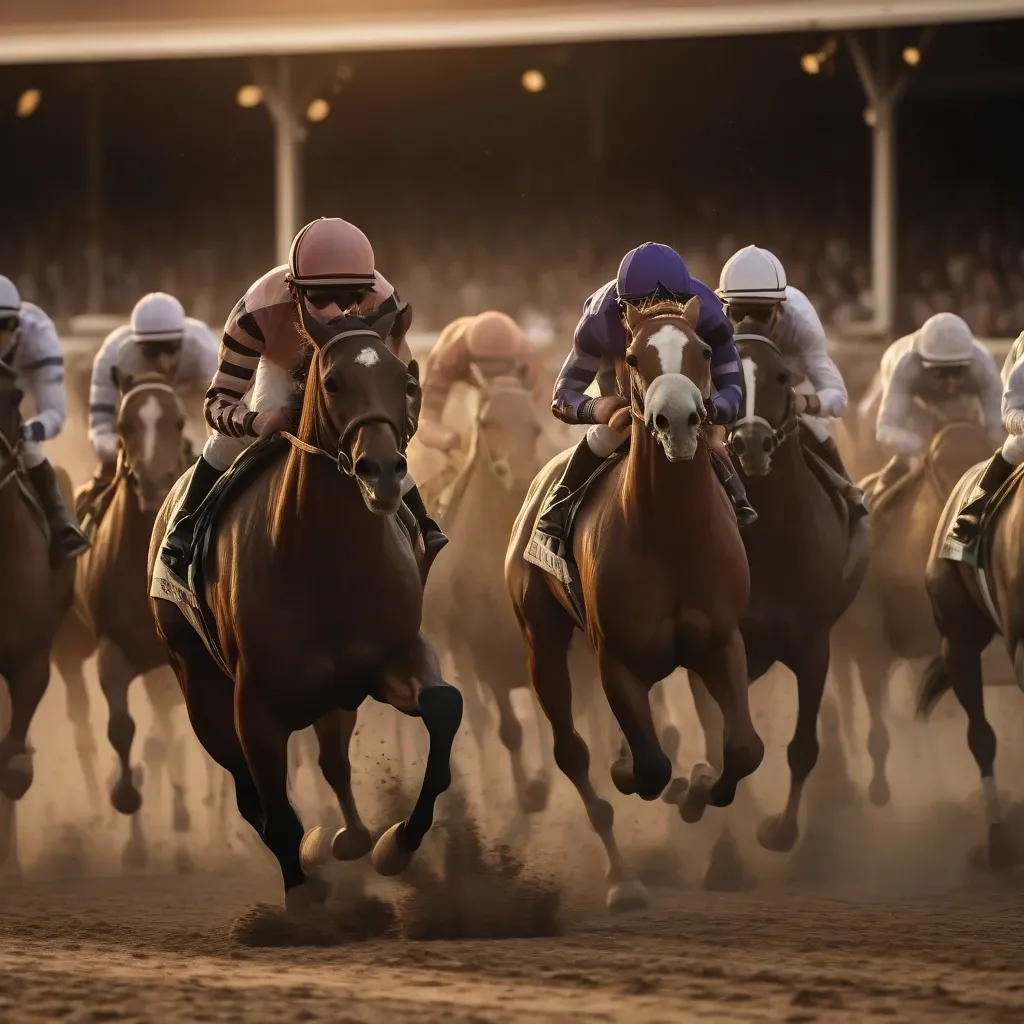
The interpretation of a photo finish is a blend of technical precision and expert judgment. When races are too close to call with the naked eye, the stewards turn to the photo finish image. This task involves carefully analyzing the captured image to determine the precise moment each horse’s nose crosses the finish line. Experts focus on several key criteria to ensure accuracy and fairness.
One of the primary tools used in this process is the timing line, a vertical line superimposed on the image that represents the official finish line. The critical point isn’t where the body of the horse is but rather the position of the horse’s nose in relation to this line. The horse whose nose crosses the timing line first is declared the winner. It sounds straightforward, but the devil is in the details.
Parallax and perspective can introduce complexities. The angle at which the photo finish camera is positioned can create distortions, making it appear as though one horse is ahead of another when it is not. Experts must account for these potential errors through careful calibration of the camera and a deep understanding of the track geometry. Experience plays a vital role here; seasoned photo finish interpreters develop an intuition for spotting and correcting these visual distortions.
Moreover, consider a situation where two horses are neck and neck, with their noses perfectly aligned. The photo finish might reveal that one horse’s nostril is just a fraction of an inch ahead of the other. That minuscule difference determines the outcome. This highlights the incredible resolution and accuracy required of photo finish systems and the expertise needed to interpret the results.
Identifying Key Visual Cues
Identifying key visual cues is fundamental in accurately reading a photo finish. Experts look for the first break in the pixelated line representing the finish line as the horse’s nose makes contact. Sophisticated software and equipment enhance these photos, making it easier to distinguish between closely positioned horses.
These visual cues are crucial in horse racing, especially when determining a dead heat. A dead heat is declared when the noses of two or more horses cross the finish line at the exact same instant. While less common, these outcomes require meticulous examination of the photo finish to confirm the tie. Professionals rely on their experience and the clarity provided by enhanced images to make the final determination, providing a fair decision.
The Technology Behind the Call: Photo Finish Systems Explained
The photo finish camera stands as the ultimate arbiter in races where victory margins vanish to the naked eye. But beyond the apparent simplicity of a finish-line snapshot lies a sophisticated blend of high-speed optics, precision timing, and cutting-edge digital technology. Modern photo finish cameras are not cameras in the conventional sense; rather, they are highly specialized line scanners. They capture a single, vertical slice of the finish line, pixel by pixel, thousands of times per second. As each slice is acquired, it’s stitched together with the preceding ones to create a composite image that accurately represents the order in which competitors crossed the line. The core of these systems lies in their astonishing frame rates. High-speed cameras can capture thousands of frames per second, far exceeding the capabilities of the human eye or traditional video cameras. This allows for the detection of the slightest differences in finishing times, often down to the thousandth of a second.
Digital imaging plays a crucial role in achieving this level of precision. Modern photo finish systems utilize high-resolution sensors to maximize the detail captured in each slice. The resolution effectively determines the clarity and sharpness of the final image, making it easier to distinguish between closely positioned competitors. Accurate timing mechanisms are equally vital. These systems often rely on synchronized clocks and laser sensors to precisely measure the elapsed time from the start to the finish of the race. This data is then overlaid onto the captured image, providing an undeniable record of the race outcome.
The contrast between old film technology and modern digital high-speed cameras shows how far this technology has come. Early photo finish systems relied on film, which presented limitations in terms of processing time and image quality. Digital systems offer instant results, superior resolution, and the ability to be easily integrated with other timing and scoring systems.
Advancements in Photo Finish Precision
Photo finish technology is constantly evolving. Recent upgrades include even higher resolutions, allowing for finer distinctions between competitors in extremely close finishes. Better light-gathering capabilities enable clearer images, even in low-light conditions. These advancements are particularly crucial in events like horse racing, where identifying the winner of a “dead heat” demands the ultimate in track technology and camera precision. Upgrades ensure greater accuracy and reliability, making it the bedrock of fair competition.
Impact on Betting: Dead Heat Rules and Payouts
A dead heat can significantly impact betting payouts, often leading to disappointment for bettors. When a dead heat occurs, bookmakers apply what are known as “dead heat rules” to determine the payout.
Dead heat rules dictate how the stakes are divided when two or more participants tie for a winning position. The standard procedure involves dividing the stake by the number of participants involved in the tie, and then paying out at the full odds on the reduced stake. For instance, if two horses dead heat for first place, the stake is halved, and the payout is calculated based on half the original stake at the original odds.
Let’s illustrate with an example: Imagine you placed a $20 bet on a horse at odds of 5/1 to win a race. If that horse dead heats for first place with another horse, the stake is divided by two, resulting in a $10 stake. The payout is then calculated as $10 at 5/1, yielding a return of $60 (including the stake). Compared to the $120 return you would have received for an outright win, the difference is considerable.
In a three-way dead heat, the stake is divided by three, and the payout is calculated accordingly. This can lead to even smaller returns, further dampening the bettor’s enthusiasm.
The phrase ‘dead heat rules apply’ is often listed in the small print by bookmakers. Bettors should understand the implications of these rules before placing a wager. While a dead heat might seem like a partial win, the reduced payout can be a stark reminder of the unpredictable nature of sports and wagering.
Famous Dead Heats: Memorable Moments in Racing History
Racing, in all its forms, thrives on the razor’s edge of competition, where victory and defeat are separated by fractions of a second. Yet, there exist those extraordinary instances when even time itself seems to falter, resulting in a dead heat – a tie of such perfect precision that the win is shared. These moments, etched in racing lore, become instant legends, sparking debate and fueling the enduring allure of the sport. Here are some of the most famous.
One such electrifying moment occurred at the 1944 Carter Handicap, forever immortalizing the names of Brownie and Bossuet. Running neck and neck down the stretch, neither horse yielded, their unwavering determination culminating in an inseparable finish. The crowd erupted in a mixture of disbelief and excitement, witnessing a rare and captivating display of equine parity.
The photo-finish at the 1947 Everglade Stakes produced another historic outcome. This time, it was Jet Pilot and But Why Not who crossed the finish line at the exact same moment, showcasing an extraordinary instance of equal ability.
Perhaps no dead heat is more widely known than that of the 1994 Queen Elizabeth II Challenge Cup Stakes. Here, it wasn’t just about the shared victory; it was about the clash of titans. Riskaverse and Sand Springs, two of the finest fillies of their generation, battled stride for stride. The shared victory only added another layer to their already impressive careers.
These famous dead heats, and countless others, serve as a reminder that in racing, as in life, sometimes the greatest victories are those that are shared. They highlight the unpredictable nature of the sport, and underscore the drama when two competitors give everything they have, resulting in a tie that echoes through racing history.
The Future of Finish Line Technology: Innovations and Accuracy
The pursuit of absolute accuracy in determining race outcomes is relentless. The future of finish line technology promises exciting advancements, poised to revolutionize how we capture and interpret those crucial final moments. While current systems are remarkably precise, ongoing development focuses on minimizing even the smallest margin for error and enhancing the overall efficiency of race officiating.
One of the most promising avenues for future development lies in the continued integration of artificial intelligence (AI). Imagine camera systems equipped with sophisticated AI-powered image recognition. These systems could automatically identify athletes, analyze their movements with unparalleled precision, and even predict potential obstructions or discrepancies in real-time. This AI-assisted analysis would significantly reduce the burden on human officials, allowing them to focus on nuanced situations requiring subjective judgment.
Beyond AI, advancements in sensor technology and data analytics could play a significant role. Imagine wearable sensors that transmit precise location data, combined with sophisticated algorithms that can differentiate between body parts, to accurately measure the precise moment an athlete’s torso crosses the finish line. The synchronization of multiple data streams, from high-speed cameras to individual athlete sensors, will provide a more holistic and irrefutable record of the race’s conclusion.
Despite the impressive strides made in finish line technology, areas for future improvement remain. Developing systems that are less susceptible to environmental factors like weather and lighting is crucial. Furthermore, the challenge of accurately capturing results in mass participation events, where numerous athletes cross the finish line simultaneously, requires innovative solutions. The ultimate goal is to create finish line technology so advanced that disputes become a relic of the past, ensuring fairness and sporting integrity for all competitors.
Conclusion
Photo finishes stand as a testament to the commitment to fairness and accuracy in horse racing. They resolve incredibly close races, including instances of a dead heat, where visual observation alone proves insufficient. The evolution of photo finish technology continues to play a crucial role in upholding the integrity of the sport, ensuring every race culminates in a just and reliable outcome.